Sep 5, 2026
A
The Parallel Women’s Workforce: A New Operating System for Human Capacity, Career Continuity, and Women-Led Economic Expansion
1. The Foundational Idea
The central idea is not menstrual leave, staffing, outsourcing, or even women’s health.
It is the creation of a new operating system for work in which women can support one another across different phases of physical capacity, family life, education, and professional development.
The current employment paradigm largely assumes:
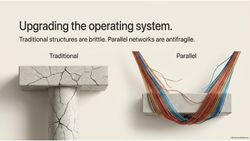
One person → one job → continuous availability → one source of productivity.
The proposed model introduces a fundamentally different architecture:
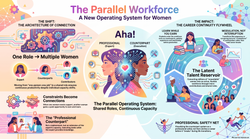
One professional role → multiple capable women → complementary availability → continuous productivity → shared opportunity.
A woman does not have to disappear from professional life when her physical or family circumstances temporarily reduce her capacity.
Instead, another woman can enter the professional environment alongside her and provide assistance, execution capacity, companionship, and eventually mentorship.
The first application may be menstrual and hormonal support.
But the underlying infrastructure can extend far beyond menstruation.
It can become a foundational female workforce infrastructure.
2. The Core Principle: Turn Human Constraints Into Human Connections
The central insight is:
When one woman's capacity temporarily decreases, another woman's opportunity can increase.
This creates a positive economic relationship.
Instead of:
Woman A cannot perform at full capacity → lost productivity
the system creates:
Woman A needs support → Woman B gains paid opportunity → Woman A remains connected to work → both women gain value.
The model therefore transforms:
absence into participation,
interruption into continuity,
unused capacity into employment,
experience gaps into learning,
mentorship into productive collaboration,
biological realities into economic opportunities.
This creates a new principle:
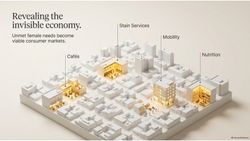
One woman's difficult phase can become another woman's growth phase.
3. The “Double World” Concept
The most powerful conceptual feature is the creation of a second layer of economic participation around the existing workforce.
If there are currently X women participating in conventional employment, the model creates an additional population of women who can participate through flexible counterpart roles.
For example:
2 million existing working women
can potentially be surrounded by:
2 million+ additional women with flexible participation opportunities.
The objective isn't necessarily to create a conventional full-time job for every additional participant.
Instead, it creates many more points of economic participation.
A woman can participate:
for several hours,
for a few days,
during particular phases of the month,
during particular phases of life,
around family responsibilities,
while studying,
while transitioning careers,
while returning from a career break,
or eventually full-time.
Thus:
Employment becomes a spectrum rather than a binary state.
4. The First Use Case: Menstrual and Hormonal Support
Menstruation provides a powerful entry point because it is recurring, predictable at a broad level, and experienced by a huge proportion of women throughout a substantial portion of their working lives.
The key insight is that the need isn't necessarily:
“Give me one day of leave.”
It may be:
“My capacity is fluctuating. I still want to participate. Give me another human being who can help me function.”
The support can occur during:
premenstrual phases,
menstruation,
post-menstrual hormonal transitions,
particularly difficult cycles,
periods of fatigue or discomfort,
other recurring fluctuations.
The woman remains the professional.
The counterpart provides human capacity around her.
5. The Counterpart Is Not Merely a Replacement
This distinction is foundational.
The counterpart is not necessarily:
taking the woman's job,
replacing her,
delegating the entire role,
or acting as a conventional temporary employee.
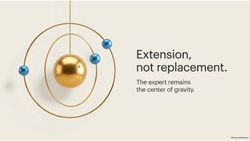
The counterpart can be an extension of the woman's professional capacity.
For example:
Senior software engineer
She knows exactly what needs to happen but is physically uncomfortable.
Her counterpart might:
open the required files,
execute clearly communicated instructions,
test code,
research an issue,
document findings,
organize information,
perform routine implementation,
monitor outputs,
assist with communication.
The expert's knowledge remains central.
The counterpart supplies additional human capacity.
This produces:
Expertise + assistance
rather than:
Expertise OR absence.
6. The Hidden Gold: Mentor–Counterpart Relationships
One of the most valuable features of the system is that the counterpart does not need to possess the same qualifications as the primary professional.
A second-year undergraduate who understands coding does not need a PhD or five years of industry experience to contribute meaningfully to certain defined activities.
This creates a new pathway:
Learn → contribute → earn → gain experience → receive mentorship → become expert.
Rather than:
Study → wait → graduate → search for first job → acquire experience.
The counterpart model turns real work itself into an educational infrastructure.
7. A New Professional Ladder
The system could create a continuous ladder:
Stage 1 — Student
Learns foundational skills.
Stage 2 — Counterpart
Begins participating in real professional environments.
Stage 3 — Experienced Counterpart
Handles increasingly sophisticated responsibilities.
Stage 4 — Professional
Becomes independently capable.
Stage 5 — Expert
Supports other professionals.
Stage 6 — Mentor
Develops the next generation.
Stage 7 — Entrepreneur
Uses accumulated knowledge to identify and solve new problems.
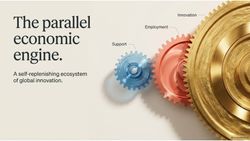
This creates a self-replenishing workforce ecosystem.
Today's counterpart can become tomorrow's expert.
Tomorrow's expert can create tomorrow's counterpart.
8. Why This Can Be Better Than Traditional Internships
Traditional internships often position the student as someone who is primarily there to learn.
The counterpart model can position her differently:
“You have a skill that has economic value today.”
She receives:
income,
real experience,
professional exposure,
mentorship,
portfolio material,
references,
confidence,
networks,
understanding of professional standards.
Her education and economic participation can happen simultaneously.
A student does not have to wait until graduation to begin becoming financially independent.
This can dramatically shorten the distance between:
education → economic participation.
9. Early Financial Independence for Women
This creates another major opportunity.
Many young women may have the ability to earn before they are ready for conventional full-time employment.
The counterpart economy could allow them to start generating income while:
studying,
living with family,
preparing for examinations,
developing professional skills,
transitioning between educational stages.
This can create earlier:
financial independence → decision-making power → professional confidence → economic agency.
A generation of women could begin building professional identities much earlier.
10. Women Who Want Family and Professional Life Simultaneously
The model directly changes the relationship between:
career and family.
Instead of forcing women into:
career OR family
the system creates:
career + family + professional support network.
A woman can remain connected to her profession while navigating:
marriage,
pregnancy,
childbirth,
postpartum recovery,
breastfeeding,
childcare,
eldercare,
household responsibilities.
The professional role can become supported rather than abandoned.
11. Pregnancy as Another Economic Opportunity Layer
Pregnancy can become another point at which the counterpart network activates.
Instead of viewing maternity primarily as:
employee leaves → organization loses capacity → employee eventually returns
the model can create:
professional continues participating according to her capacity → counterpart provides additional capacity → professional knowledge remains connected to the organization.
This can make professional continuity much more fluid.
The woman can determine:
what she wants to continue,
what she wants assistance with,
when she wants to reduce involvement,
when she wants to increase involvement again.
Her career becomes adaptive rather than interrupted.
12. Postpartum as a Career-Continuity Infrastructure
Postpartum could become another major application.
A woman may want to remain intellectually connected to her profession even when her physical and family responsibilities are intense.
A counterpart can provide a bridge.
That means:
Career continuity doesn't require identical capacity at every stage of life.
This could fundamentally change how society thinks about career breaks.
A “career break” could increasingly become a career modulation period.
13. The Return-to-Work Revolution
The same system could help women returning after:
maternity,
childcare,
caregiving,
relocation,
family responsibilities,
extended personal periods.
Instead of returning as a complete beginner, a woman could gradually reconnect through:
small assignments → counterpart roles → professional participation → larger responsibilities → full-time work.
This creates a return pathway rather than a restart.
14. The Flexible Workforce Becomes a Massive Talent Reservoir
There are enormous numbers of educated women who possess:
degrees,
skills,
professional experience,
industry knowledge,
intellectual capability,
but cannot participate in conventional full-time employment.
The model converts this population from:
“potential workforce”
into:
“active workforce capacity.”
This is one of the largest latent talent pools in the world.
15. Women Who Already Have Degrees But Have Family Responsibilities
A particularly powerful segment is the woman who says:
“I am qualified. I have the skills. I simply cannot work eight or nine hours every day.”
Traditional employment may consider her unavailable.
The counterpart economy can say:
“Give us the capacity you do have.”
Perhaps she works:
two hours a day,
three days a week,
several days per month,
around school schedules,
during specific professional windows.
Her skills remain economically active.
16. The Creation of a Female Skills Marketplace
Once the network becomes sufficiently large, it can become a marketplace for:
coding,
design,
accounting,
legal research,
writing,
data analysis,
marketing,
finance,
operations,
education,
engineering,
research,
healthcare administration,
project management,
consulting.
The key shift is:
Skills become divisible from traditional job structures.
A woman doesn't necessarily have to sell herself as an entire employee.
She can contribute specific capabilities.
17. A New Definition of Employment
Traditional employment asks:
“Can you work this schedule?”
The new model can ask:
“What can you contribute, when can you contribute it, and who can you help?”
This creates a much richer employment spectrum.
Possible participation levels
Micro-contribution
Short assignment
Daily counterpart
Weekly counterpart
Part-time professional
Project professional
Full-time professional
Mentor
Specialist
Entrepreneur
This can create many more economic entry points.
18. The Mentor Economy
As counterpart relationships mature, mentorship itself becomes embedded into productive work.
A senior professional can mentor while working.
A junior professional can learn while earning.
A company can receive productivity while developing talent.
This merges:
employment + education + mentorship.
That combination could become enormously valuable.
19. The “Experience Economy” for Young Women
Instead of experience being something that begins after education, experience becomes something accumulated continuously.
A student might graduate with:
academic credentials,
verified professional experience,
mentors,
professional references,
project history,
industry relationships.
This could significantly accelerate women's movement into higher-value roles.
20. The Female Economic Flywheel
Once enough women participate, a powerful cycle can emerge:
More women participate
↓
More women earn
↓
More women gain experience
↓
More women become professionals
↓
More women become mentors
↓
More women become entrepreneurs
↓
More women identify unmet needs
↓
More women create businesses
↓
More employment is created
↓
More women participate
This is a self-reinforcing economic ecosystem.
21. The Emergence of a Parallel Women's Economy
The counterpart infrastructure could generate demand for entirely new categories of businesses.
This is where the idea becomes much larger.
Once women begin participating at scale, entrepreneurs begin asking:
“What else do women need to make this lifestyle easier?”
That question can produce an entire ecosystem.
22. Period Nutrition Businesses
Specialized food businesses could emerge around menstrual wellbeing.
Examples:
period meal subscriptions,
nutrition-focused cafés,
workplace menstrual meal delivery,
cycle-aware meal planning,
nutrient-dense comfort food,
personalized meal services.
Instead of improvising food during difficult days, women could have purpose-built nutritional infrastructure.
23. Period Cafés
A new hospitality category could emerge:
Cafés designed specifically around menstrual comfort and wellbeing.
Potential features:
nutritious food,
comfortable seating,
heating facilities,
quiet areas,
hydration,
wellness services,
private spaces,
work-friendly environments.
This could become a distinct consumer category.
24. Rapid Menstrual Stain Services
A surprisingly simple but potentially valuable category:
instant clothing/laundry assistance.
Imagine a service near:
offices,
universities,
malls,
transit stations,
coworking spaces.
A woman experiences an accidental stain.
Instead of panic:
request → pickup/cleaning/replacement → continue her day.
A tiny pain point becomes a commercial service.
25. Women-Centered Mobility
Specialized mobility services could emerge around comfort and convenience.
Potential services:
women-focused ride networks,
menstrual comfort rides,
workplace transportation,
postpartum mobility,
family-friendly professional mobility,
scheduled support transportation.
Again, the principle is:
Infrastructure designed around actual female life rather than an abstract average user.
26. Menstrual Wellness Businesses
Entire categories could develop around:
massage,
relaxation,
heat therapy,
movement,
yoga,
restorative spaces,
sleep,
wellness retreats.
For example:
“Massage cafés” or wellness studios specifically designed around menstrual discomfort.
The important thing is not the individual business.
It is the creation of a recognizable market category.
27. Women's Health R&D
A larger participating female workforce creates something even more important:
more women researching women's problems.
Women can enter:
biomedical research,
medical-device development,
pharmaceutical research,
reproductive-health technology,
hormonal research,
pelvic-health innovation,
menopause research,
maternal-health research.
The ecosystem creates both customers and creators.
28. Women-Led Health Innovation
More women in economic and scientific participation can lead to more companies focused on areas historically underserved by mainstream markets.
Potential areas include:
menstrual health,
fertility,
pregnancy,
postpartum,
menopause,
hormonal health,
pelvic health,
maternal nutrition,
women's mental wellbeing,
women's longevity.
This creates an enormous potential women's health innovation economy.
29. The Knowledge Multiplier
There is another effect that is easy to underestimate.
When experienced women work with younger women, knowledge stops being locked inside individual careers.
It gets transferred.
Senior professional:
experience → younger counterpart
Younger counterpart:
knowledge → future professional
Future professional:
knowledge → next generation
The ecosystem therefore becomes a knowledge transmission network.
30. Women Becoming Founders Because They See the Problems
As women participate more deeply in the workforce, they encounter problems firsthand.
Those problems become business ideas.
A woman experiencing a workplace problem may build:
a product,
a service,
a software platform,
a healthcare company,
a research organization,
a consumer brand.
The workforce therefore becomes a startup discovery engine.
31. The Creation of Entirely New Markets
The most exciting possibility is that many businesses may not currently exist because the demand has never been aggregated.
Once millions of women become connected through a common ecosystem, entrepreneurs can see:
recurring needs,
purchasing patterns,
unmet requirements,
geographic gaps,
professional gaps,
health gaps,
family-care gaps.
Invisible demand becomes visible demand.
And visible demand attracts:
entrepreneurs + capital + researchers + technology + institutions.
32. Women as Both Producers and Consumers
The ecosystem has a compounding effect because women occupy two roles simultaneously.
They become:
Producers
employees,
freelancers,
mentors,
researchers,
founders,
engineers,
designers.
Consumers
healthcare customers,
food customers,
mobility customers,
wellness customers,
technology customers,
education customers.
Therefore, increased female participation expands both sides of the economy.
33. More Women in the Workforce → More Female Purchasing Power
Income doesn't merely benefit the individual.
It increases:
household purchasing power,
women's financial autonomy,
ability to invest in education,
ability to invest in health,
ability to start businesses,
ability to support family members,
ability to fund future generations.
Economic participation can therefore have intergenerational effects.
34. The “Women Know Women” Innovation Effect
There is a powerful knowledge advantage created by lived experience.
Women who personally experience a problem can identify nuances that may otherwise remain invisible.
A larger population of women in:
engineering,
medicine,
product design,
research,
entrepreneurship,
venture capital,
policy,
means more people capable of translating those lived experiences into solutions.
This can accelerate innovation around women's needs.
35. More Female Researchers → More Female Health Knowledge
The system could eventually influence the research pipeline:
More women participating
→ more women entering science
→ more women researching women's health
→ more discoveries
→ more products
→ more businesses
→ more jobs
→ more women entering science.
This becomes another reinforcing loop.
36. The Female Entrepreneurship Flywheel
The same principle applies to entrepreneurship:
Economic participation
→ income
→ confidence
→ networks
→ expertise
→ identification of problems
→ startup formation
→ employment
→ investment
→ more startups.
The counterpart system can therefore become an entrepreneurship incubator without formally being an incubator.
37. A New Kind of Professional Community
The network could eventually become more than a labor marketplace.
It could become a professional social infrastructure for women.
Women could find:
counterparts,
mentors,
mentees,
collaborators,
co-founders,
researchers,
investors,
clients,
employers,
professional friends.
The platform becomes a network of female capability.
38. From Counterpart to Collaboration
Initially:
Woman A needs support → Woman B helps.
Later:
Woman A knows Woman B's strengths → they collaborate.
Eventually:
Two women discover an idea → they build something together.
The original support relationship can therefore generate:
collaboration → partnership → company creation.
39. The Counterpart Could Become a Career Discovery Mechanism
A young woman may enter the ecosystem thinking she wants to become a programmer.
After working beside several professionals, she discovers:
“Actually, I love product management.”
Or:
“I want to become a cybersecurity researcher.”
Or:
“I want to start a healthcare company.”
Real professional exposure can help women discover careers much earlier.
40. The Creation of “Professional Companionship”
There is potentially an entirely new category here.
Not:
assistant
Not:
employee
Not:
intern
Not:
replacement
But:
Professional counterpart.
A counterpart is someone who combines:
capacity + companionship + learning + support + professional development.
That could become a new vocabulary in the labor market.
41. The Operating System Could Eventually Serve Every Stage of a Woman's Life
A woman might move through the ecosystem like this:
Student
Earns while learning.
↓
Young professional
Uses counterparts during difficult periods.
↓
Expert
Mentors younger counterparts.
↓
Pregnancy
Uses flexible professional support.
↓
Mother
Adjusts professional participation around family.
↓
Experienced professional
Returns gradually to greater participation.
↓
Mentor
Develops younger women.
↓
Founder
Creates a business.
↓
Investor
Funds another woman's business.
This creates career continuity across the entire life cycle.
42. The Most Powerful Shift: From Career Breaks to Career Continuity
The traditional concept:
Career break
could increasingly be replaced with:
Career transition.
Instead of disappearing from the professional ecosystem, a woman changes her level of participation.
Her professional identity remains alive.
Her network remains alive.
Her skills remain active.
Her experience continues accumulating.
That can radically change the economics of women's careers.
43. A New Social Contract Around Work
The deeper societal proposition is:
A human being should not have to choose between being fully human and being professionally productive.
People have bodies.
People have families.
People have children.
People have changing capacities.
People have different life stages.
The employment system can acknowledge this without abandoning productivity.
Instead:
Human variability becomes something the workforce architecture is designed to accommodate.
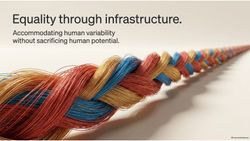
44. Equality Through Infrastructure
This leads to a broader philosophical principle.
Equality does not always begin with:
“Everyone must receive exactly the same treatment.”
It can begin with:
“What prevents this person from fully participating?”
Then build the infrastructure that removes unnecessary friction.
For women, this may involve:
menstruation,
hormonal fluctuations,
pregnancy,
postpartum,
childcare,
caregiving,
career re-entry.
Instead of debating endlessly about men versus women, the system focuses on:
Where is human potential being lost, and how can we restore it?
This turns equality into an engineering problem rather than merely a moral argument.
45. The Economic Philosophy
The model ultimately says:
Don't lower the standard. Increase the support around the human being.
A highly skilled woman doesn't have to become less ambitious.
A mother doesn't have to stop being professional.
A student doesn't have to wait until graduation to become economically useful.
An experienced woman doesn't have to become economically invisible because she cannot work a conventional schedule.
Instead:
different women can support different women at different stages.
46. The Fundamental Economic Unit Changes
The conventional unit of employment is:
Person + Job
The proposed system introduces:
Person + Counterpart + Capability Network
This creates distributed human capacity.
A business no longer depends entirely on the uninterrupted availability of one individual.
At the same time, another person doesn't need to wait for an entirely new job position to become available before becoming economically productive.
47. The Potential Global Scale
The concept is particularly powerful because the underlying human condition is universal.
Women everywhere experience:
menstruation,
hormonal changes,
pregnancy,
motherhood,
family responsibilities,
career transitions.
And women everywhere possess:
skills,
education,
experience,
unused capacity,
entrepreneurial potential.
Therefore the underlying infrastructure can potentially operate across:
countries → industries → professions → education levels → life stages.
48. The Ultimate Network Effect
The larger the network becomes:
more women needing support
→ more women available to provide support
→ more skills available
→ more professional matches
→ better mentorship
→ more experience accumulated
→ more women entering higher-value work
→ more businesses created
→ more demand for women professionals
→ more women joining the network.
The network becomes increasingly valuable because more women participate in it.
49. The Long-Term Possibility: A Women-Centered Economic Layer
At maturity, the platform could become an infrastructure connecting:
Work
Women supporting women's professional continuity.
Education
Women learning directly through professional participation.
Mentorship
Experienced women developing emerging women.
Healthcare
Women identifying and solving women's health problems.
Consumer services
Businesses designed around women's actual needs.
Entrepreneurship
Women discovering problems and creating solutions.
Finance
Women earning, saving, investing and funding businesses.
Research
More women entering research into previously underserved areas.
Community
Women building networks of mutual professional support.
This is no longer a single business.
It is an economic layer.
50. The Ultimate Flywheel
The entire vision can be condensed into one expanding loop:
Support women → unlock women's capacity → create women's employment → increase women's income → increase women's independence → increase women's participation → increase women's knowledge → increase women's entrepreneurship → create businesses for women → create more jobs → fund more research → create more innovation → improve women's lives → unlock even more women's capacity.
And then the loop begins again.
51. The Most Powerful Expression of the Idea
The concept can ultimately be expressed in one sentence:
“When one woman needs support, another woman gets an opportunity.”
And its economic interpretation:
“We don't merely compensate for lost productivity. We convert unused human capacity into productive opportunity.”
Its social interpretation:
“Women don't have to choose between work and life; women can help women have both.”
Its workforce interpretation:
“One professional role can create multiple pathways to economic participation.”
Its innovation interpretation:
“More women participating means more women solving problems, building companies, conducting research, and creating the future.”
Its philosophical interpretation:
“Equality can be built by removing the friction that prevents human potential from expressing itself.”
52. The Highest-Level Vision
The ultimate vision is not a period-support company.
It is not a staffing company.
It is not an internship platform.
It is not a women's-health company.
It is not a mentorship platform.
Those can all become components.
The foundational vision is:
Build an operating system in which women's professional lives can remain continuous across the changing realities of women's lives—by connecting women with other women who can provide capacity, opportunity, knowledge, mentorship and economic participation.
From that foundation, an entire ecosystem can emerge.
A second workforce.
A mentorship economy.
A flexible employment economy.
A women's health innovation economy.
A female entrepreneurship ecosystem.
A new generation of professional networks.
And potentially, a world in which the question is no longer:
“How do we make women fit the existing workplace?”
but:
“How do we design the workplace so that more of women's enormous human potential can participate?”








By undefined
15 notes ・ 4 views
Punjabi
Beginner